



YOUR CART
- No products in the cart.
Subtotal:
$0.00
BEST SELLING PRODUCTS
$6.95



The Bible was the single most important influence in the birth, growth, and development of the United States of America. The men who colonized the states, wrote our laws and constitutions, started our schools and colleges, guided us through the American Revolution, and gave us the Declaration of Independence and the Constitution were very knowledgeable of the Scriptures. This is a testament to the thorough Biblical education they received in their homes, churches, and schools.
The average colonial American heard about 15,000 hours of preaching in his lifetime. Scriptural truth was a part of their thought and speech and directed their actions in all spheres of life. They were so immersed in a knowledge of the Bible it was not necessary for them to explain to others when they were making biblical arguments.
The founders considered it shameful to be ignorant of the Bible. John Quincy Adams said:
To a man of liberal education, the study of history is not only useful, and important, but altogether indispensable, and with regard to the history contained in the Bible … It is not so much praiseworthy to be acquainted with as it is shameful to be ignorant of it.[i]
A shameful ignorance of the Bible is the state of most Americans today, including most educators at all levels. Many have argued our founders were not Christian because they rarely quoted Scriptures. They say there are few Bible citations in their writings (that is, recording of specific chapters and verses in the Bible). Their lack of knowledge of the Bible is why they can read Patrick Henry’s “Give Me Liberty or Give Me Death” speech and have no clue he references a dozen or so Scriptures. Those listening to his speech in March 1775 would recognize all the biblical allusions.
Academicians today can read John Locke’s Second Treatise on Civil Government and think that his ideas were primarily drawn from secular enlightenment writers because Locke rarely cites the Bible. In reality, he directly references scores of Scriptures and draws ideas from hundreds of Bible passages.
Without a knowledge of the Bible, one cannot understand the worldview of our Founding Fathers. This is certainly true of George Washington. Washington used about 80 different names for God, each reflecting a unique aspect of His character as Washington learned from sermons and Biblical readings that were a regular part of his life.
Washington quoted Scriptures extensively in his writings. In a Circular to the States (1782) he referred to Ecclesiastes 9:11 when he wrote “the race is not always to the swift, or the Battle to the strong.”[ii] Writing to the Marquis de Chastellux, he referred to Isaiah 2:4 in expressing his wish “that the swords might be turned into plough-shares, the spears into pruning hooks, and, as the Scripture expresses it, ‘the nations learn war no more.’”[iii] He wrote to Lafayette, “I am become a private citizen on the banks of the Potomac, and under the shadow of my own Vine and my own Fig-tree … I am solacing myself”[iv] alluding to 1 Kings 4:25, Micah 4:34, Zechariah 3:10, and Isaiah 36:16. He spoke of Pharaoh in Exodus 5:7 who “compelled the Children of Israel to Manufacture Bricks without the necessary Ingredients.”[v] He referred to “the widow’s mite” (Mark 12:41-44; Luke 21:1-4) in a letter to his adopted son.[vi] There are many more Biblical passages in his writings.
One of Washington’s favorite phrases was “under my own vine and fig tree,” which he used about 50 times in his writings.[vii] In a letter to John Armstrong, Jan. 10, 1783, Washington wrote: “[I] wish you may possess health and spirits to enjoy, after we shall have seated ourselves under our own Vines and Fig trees, if it is the gracious will of Providence to permit it, the return of many happy years.”[viii]
Washington uses the phrase in a letter to the Hebrew Congregation in Newport, Rhode Island, expressing they have freedom in this country to sit under their own vine and fig tree:
May the children of the stock of Abraham who dwell in this land continue to merit and enjoy the good will of the other inhabitants – while every one shall sit in safety under his own vine and fig tree and there shall be none to make him afraid.[ix]
The United States was the only country in the world where Jews (as well as other peoples) had such freedom.
His use of this Biblical phrase reflects not only his knowledge of particular Bible verses, but also his understanding of the various Scriptural truths presented in the different contexts. The phrase “vine and fig tree” is used five times in Scripture. Each reference expands truths expressed by this phrase.
These verses speak of living without fear and living in freedom. They imply limited government that performs its limited function to protect everyone’s God-given life, liberty, and property. They imply a flourishing society, one the Bible says will occur in the age of the Messiah. These present an image of the kingdom of God – of a world full of His peace, joy, and righteous standards.
This Biblical expression encapsulates many major components of biblical capitalism: private property, individual enterprise, productivity, freedom, limited government. Washington and our founders understood such ideas were uniquely manifested in the United States of America. They understood American Exceptionalism came from Christianity. Their extensive use of the Bible reveals their deep Biblical worldview. This is one of many things that reveal America was founded as a Christian nation.
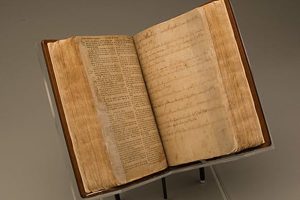
The founders sought to apply their extensive knowledge of the Bible in every sphere of life. This was the source of our great liberty, prosperity, and advancement.
[i] Letters of John Quincy Adams to His Son on the Bible and Its Teachings, Auburn: James M. Aledn, 1850, p. 64.
[ii] George Washington, The Writings of George Washington from the Original Manuscript Sources, 1745-1799. Edited by John C. Fitzpatrick, 39 volumes, Washington DC: U.S. Government Printing Office, 1931, 23:478.
[iii] Ibid., 29:485.
[iv] Ibid., 27:317.
[v] Ibid., 27:128.
[vi] Washington to George Washington Parke Custis, November 15, 1796, in Recollections and Private Memoirs of the Life and Character of Washington by George Washington Parke Custis, Edited by Benson J. Lossing, Philadelphia: Buckland, Wars, and Field, 1859, p. 74.
[vii] Daniel Dreisbach, The “Vine and Fig Tree” in George Washington’s Letters: Reflections on a Biblical Motif in the Literature of the American Founding Era. Anglican and Episcopal History, Vol. 76, No. 3 (September 2007), pp. 299-326, Published by: Historical Society of the Episcopal Church. https://www.jstor.org/stable/42613108
[viii] George Washington to John Armstrong, Jan. 10, 1783. Letter in Writings edited by Fitzpatrick, Vol. 26:27
[ix] Michael and Jana Novak, Washington’s God: Religion, Liberty, and the Father of Our Country, New York: Basic Books, 2006, p. 239.
[x] See Stephen McDowell, Stewarding the Earth, A Biblical View of Economics, Charlottesville: Providence Fdn., 2022.
PF UNIVERSITY
The courses offered by the Providence Foundation Biblical Worldview University (BWU) are designed to equip leaders of education, business, and politics to transform their culture for Christ, and to train all citizens how to disciple nations.
DONATE
Support Providence Foundation today! Choose Minuteman, Patriot, or Founder level and make a monthly impact. Or select ‘Custom’ to contribute now. Join us in shaping our nation’s future



Providence Foundation
P.O. Box 6759
Charlottesville, VA 22906
To place order:
434-978-4535
For all other inquiries:
Copyright 2026 | All Rights Reserved | Website By Sovic Creatives